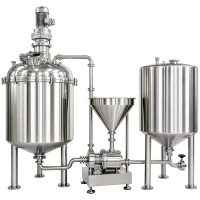

Fermentation is the process by which yeast converts the glucose in the wort to ethyl alcohol and carbon dioxide gas -- giving the beer both its alcohol content and its carbonation. To begin the fermentation process, the cooled wort is transferred into a fermentation vessel to which the yeast has already been added. If the beer being made is an ale, the wort will be maintained at a constant temperature of 68 F (20 C) for about two weeks. If the beer is a lager, the temperature will be maintained at 48 F (9 C) for about six weeks. Since fermentation produces a substantial amount of heat, the tanks must be cooled constantly to maintain the proper temperature.
These fermentation tanks hold more than 2,400 gallons (9,085 L), which means that it takes four batches of wort to fill one tank. Since fermentation takes at least two weeks, the capacity of the brewery is limited by how many tanks they have.
When the wort is first added to the yeast, the specific gravity of the mixture is measured. Later, the specific gravity may be measured again to determine how much alcohol is in the beer, and to know when to stop the fermentation.
The fermenter is sealed off from the air except for a long narrow vent pipe, which allows carbon dioxide to escape from the fermenter. Since there is a constant flow of CO2 through the pipe, outside air is prevented from entering the fermenter, which reduces the threat of contamination by stray yeasts.
When fermentation is nearly complete, most of the yeast will settle to the bottom of the fermenter. The bottom of the fermenter is cone shaped, which makes it easy to capture and remove the yeast, which is saved and used in the next batch of beer. The yeast can be reused a number of times before it needs to be replaced. It is replaced when it has mutated and produces a different taste -- remember, commercial brewing is all about consistency.