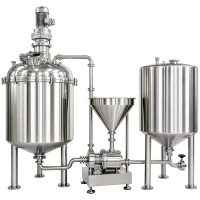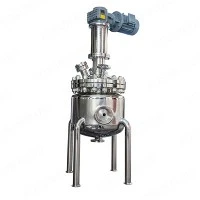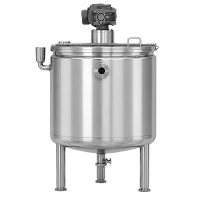

The comparison between colloid mills and conventional grinding methods reveals fundamental differences in both mechanism and outcome. Conventional grinding - whether using stone mills, mixer grinders, or hammer mills - typically relies on compressive, impact, or abrasive forces to reduce particle size. These methods often produce wider particle size distributions, require multiple passes for acceptable results, and struggle with oil-water emulsions that demand both particle size reduction and emulsion stabilisation. Stone grinders, for example, rely primarily on compressive forces and require significantly more energy - sometimes twice the energy of a colloid mill - while achieving less particle size reduction.
The colloid mill's rotor-stator design provides several distinct advantages for food processing applications. First, it enables precise control over particle size through adjustable gap settings between the rotor and stator. This allows operators to dial in consistent fineness and stable emulsion texture, customising the output for specific product requirements. Second, the high-shear environment simultaneously achieves particle size reduction and emulsion stabilisation in a single pass - eliminating the need for separate grinding and homogenisation steps. Third, modern colloid mills are CIP-compatible, with designs that allow thorough cleaning without disassembly. The ability to adjust shear force without opening the mill - using external gap adjustment mechanisms - enables rapid changeovers between different products.
For food processors, the practical implications are substantial. A colloid mill enables the production of premium products with consistent quality, texture, and mouthfeel. For mustard producers, for example, a rotor-stator colloid mill delivers repeatable mechanical shear and precise gap control, producing consistent droplet and particle sizing and a stable emulsion for premium varieties. For sauce and dressing manufacturers, the colloid mill achieves the fine particle sizes required for smooth, stable emulsions that resist separation during shelf life.
The one-pass capability of colloid mills translates to significant operational efficiencies. Instead of multiple passes through conventional grinding equipment followed by separate homogenisation, processors can achieve the desired particle size and emulsion stability in a single operation. This reduces processing time, minimises product loss, lowers energy consumption, and simplifies quality control. The result is a more efficient, more consistent, and more cost-effective production process - one that delivers the sub-micron particle sizes and stable emulsions that today's consumers demand. For food processors seeking to differentiate their products through superior texture, stability, and mouthfeel, the colloid mill represents not just an equipment choice, but a strategic investment in product quality and manufacturing excellence.