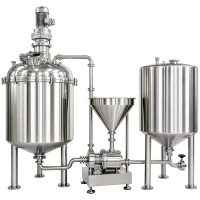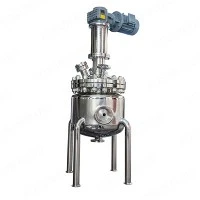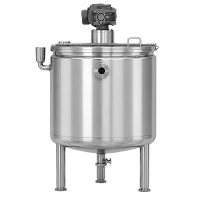

For food processing equipment manufacturers seeking access to the European Union market, understanding the Pressure Equipment Directive (PED) 2014/68/EU and its CE marking requirements is not optional - it is the essential gateway to commercial entry. The PED sets mandatory requirements for pressure equipment operating in a pressure range exceeding 0.5 bar. This directive governs the design, manufacture, and conformity of stationary pressure equipment, including pressure vessels, piping, and safety accessories used extensively in the food and beverage industry.
The scope of PED 2014/68/EU is broad and directly impacts food processing operations. Steam boilers used for sterilisation, pressure vessels for pasteurisation, saturators, compressed air systems, and any equipment containing pressurised fluids must comply with the directive. The directive uses a classification system based on maximum allowable pressure, volume, and the hazard level of the fluid, with Categories I through IV determining the stringency of conformity assessment required. For Category III and IV vessels, notified body inspection is mandatory.
Achieving CE marking under the PED requires a structured conformity assessment process. Manufacturers must prepare a comprehensive technical file that includes design calculations, material specifications, welding procedure specifications, and risk assessment documentation. Depending on the vessel category, conformity assessment may involve Module H (full quality assurance) or Module B+D (type examination plus production quality assurance) by a Notified Body. The process culminates in the issuance of an EU Declaration of Conformity and the affixing of the CE mark to the equipment.
The documentation requirements under PED are extensive and rigorous. Manufacturers must provide design calculations and verification, P&ID diagrams, general arrangement drawings, material specifications, and weld procedure specifications. Material certification requires mill test certificates (EN 10204 3.1/3.2), material traceability records, food contact compliance declarations, surface finish certifications, and passivation records. Testing and inspection documentation includes hydrostatic pressure test reports, pneumatic test certificates, non-destructive testing inspection reports, functional testing documentation, and factory acceptance test reports.