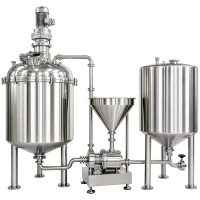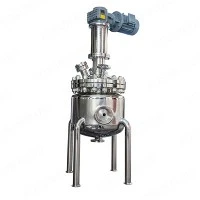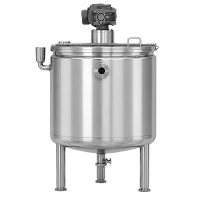

A stainless steel food-grade vacuum evaporator is a kind of equipment that utilizes vacuum environment to reduce the boiling point of materials and remove water by heating and evaporation to achieve concentration, purification or volume reduction. Compared with atmospheric evaporation, vacuum evaporation has a relatively low temperature and is particularly suitable for concentrating food ingredients that are sensitive to heat, oxidize easily or require to flavor retention.
stainless steel food-grade vacuum evaporators are widely used in fruit juice, dairy products products, flavoring, plant extracts, syrups and other industries due to the strict requirements of hygiene, material safety, easy cleaning and product quality in food processing.
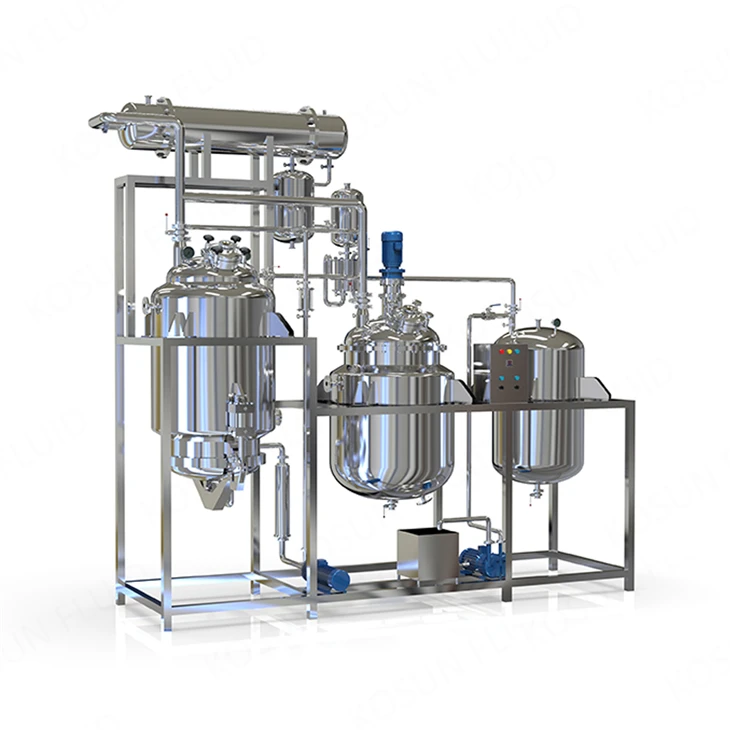
1.Fruit Juice and Fruit Processing Industry
Fruit juice processing is an important application field of food-grade vacuum evaporators.
In the processing of fruit juices such as apples, grapes, oranges and pears, moisture content is often reduced by concentration. This reduces subsequent storage and transport costs while increasing the product's solids content.
Vacuum evaporation reduces the boiling temperature of the material and, under appropriate technological conditions, minimizes the adverse effects of high temperature on fruit aroma, color and nutritional composition. Therefore, suitable vacuum evaporation equipment can be selected according to the special material characteristics of products such as concentrated fruit fruit juice, fruit pulp and some fruit processing by-products.
2.Dairy processing industry
Concentration processes is also essential in dairy processing.
For example, ingredients such as whey, milk and other dairy products may require to be partially moisture removal to increase solids concentration in preparation for subsequent steps in spray drying, formulation or other processing stages.
Stainless steel food-grade vacuum evaporators allow evaporation conditions to be adjusted to the thermal sensitivity and viscosity of dairy products. Parts of the equipment that come into contact with materials must be made from food-grade materials and must also meet internal cleaning and hygiene standards.
For dairy enterprises, when choosing evaporator, not only evaporation capacity, but also material fouling (scaling), equipment cleaning and maintenance convenience, etc.
3. Seasoning and Sauce Processing Industry
Evaporation and concentration are used to control final solids solids content product product viscosity the production of ketchup, fruit jams, condiments, soy sauce and certain liquid condiments. Such materials usually possess a certain viscosity, and some products contain sugar, salt, protein or plant particulates; consequently, there are specific requirements for the the evaporator's heat transfer structure, the way the material circulation and the prevention of local overheating.
Vacuum evaporation moisture removal at lower temperatures and helps minimise problems such as burning, discolouring or flavor alteration caused by overheating.
4. Food Additives and Ingredients Industry
Concentration and dehydration are often involved in the production of food additives, food food ingredients and certain functional food ingredients.
For example, liquid food ingredients, plant-derived concentrates and fermentation broths often require a reduction in moisture and an increase in the concentration of active ingredients before moving on to the next processing stage.
When dealing with these materials, the evaporator must be selected based on factors such as the viscosity, boiling point, thermal sensitivity and target concentration of the raw material. Preference to evaporation speed alone may not produce optimal production results; stable temperature control is as important as uniform heat transfer.
5. Plant Extract and Natural Raw Material Processing Industry
After extraction, some plant extract solutions require to be further concentrated to increase the levels of active ingredients and reduce the burden of subsequent drying processes.
Vacuum concentration processes is commonly used in tea extracts, other plant extracts and various natural food raw materials.
Because some elements in plant extracts are sensitive to temperature, vacuum conditions allow for lower evaporation temperatures, thus mitigating the effects of prolonged exposure to high temperatures on product quality.
In this application context, key factors of equipment selection include the evaporator's material composition, sealing performance, temperature control capabilities and cleaning methods.
6. Syrup and Sweetener Processing Industry
The production of syrup- which includes glucose syrup, fructose syrup and other liquid sweeteners- usually requires precise control of the ratio of moisture to solids.
Vacuum evaporators achieves the target concentration by adjusting vacuum, heating temperature and evaporation duration.
However, sugary materials are prone to wall adhesion and dirt during enrichment, therefore equipment must be designed with heat transfer efficiency, material flow dynamics, and cleanliness and maintenance convenience in mind.
For syrups with high viscosity, evaporation method should be selected according to the specific characteristics of the material, rather than relying solely on the rated evaporation capacity of the 7. Processing of Fermented Foods and Food Industry By-products
Vacuum evaporators may also be required for the production of certain fermented foods and by-products of the processed food industry.
For example, fermentation broths, food processing wastewater or high moisture content by-products can be concentrated to reduce volume, thus enhancing the efficiency of subsequent processing or resource recovery.
This application provides important value for comprehensive utilization of resources in food processing plants. However, specific equipment designs must be tailored to the composition of the material, solid content, viscosity and the presence of any volatile components.
8. Why Does the Food Industry Prioritize "Stainless Steel + Food-Grade" Designs?
food processing equipment has much stricter standards of hygiene and materials than standard industrial evaporation equipment.
For food-grade stainless steel vacuum evaporators, key considerations include:
Material in contact with the product must meet relevant food processing standards;
Internal equipment structure should minimize the ``dead angle"and be easy to clean.
Sealing mechanisms shall minimize the risk of external contamination;
Temperature and vacuum controls must be stable to accommodate a variety of foods;
Cleaning and maintenance should be convenient to minimize equipment downtime.
Therefore, when purchasing equipment, companies should not base their decisions solely on price and evaporation capacity; they must also consider the specific materials and production processes involved in a comprehensive manner.
9. How Can Food Processing Companies Determine if a Vacuum Evaporator is appropriate?
Not all food concentration processes require Vacuum evaporators. Businesses can assess suitability based on several factors:
First, consider the heat sensitivity of the product. vacuum evaporation is often preferred if the product requires minimal high temperature exposure.
Secondly, assess the need for concentration. evaporation equipment can provide significant value if companies need to significantly increase solids content, reduce moisture, or reduce the load of downstream drying processes.
Finally, other factors must be considered, such as production capacity, target concentration, material viscosity, initial and final solids content and energy availability.
For purchasers, it is advisable to provide comprehensive material specifications and production requirements, allowing equipment supplier to determine the optimal evaporator structure and configuration based on actual performance. Abstracts
Stainless steel food-grade vacuum evaporators are mainly used in food processing industries that require liquid concentration, dehydration or shrinkage. Applications include fruit fruit juice, fruit processing, dairy products, condiments, soy sauce, food ingredients, plant extracts, syrups and certain fermented foods.
Their core advantage is the use of vacuum to reduce the boiling point of the material, allowing concentrations to occur at relatively low temperatures. Vacuum evaporation technology is highly suitable for thermal food products, products with strict flavor requirements and product quality control is very critical.
Frequently Asked Questions
Q1: Can stainless steel food-grade vacuum evaporators be used to fruit juice concentration?
Yes. ' Fruit juices, pulp and other fruit-based materials are common applications; the selection of specific equipment depends on factors such as juice composition, solids content and target concentration.
Q2: Are vacuum evaporators suitable for dairy processing?
Yes. ' Dairy ingredients such as milk and whey can be processed using vacuum concentration, but factors such as heat sensitivity, dirt and cleaning requirements must be carefully considered.
Can food-grade vacuum evaporators handle highly viscous materials?
Yes, but the evaporation structure, circulation method and heat transfer design must be selected according to the viscosity of the material.
Q4: What is the difference between a a food-grade vacuum evaporator and a standard industrial evaporator?
The main differences are hygiene design, material specifications, cleaning methods and suitability for food processing. Food production typically places greater emphasis on hygiene and cleanliness standards for equipment parts that come into contact with the product.
Q5: What parameters are needed to buy a a food-grade vacuum evaporator?
To ensure the correct selection of equipment, it is recommended that information be provided on the name of the material, processing capacity, initial concentration, target concentration, material temperature, viscosity, heat sensitivity and whether the process is continuous or batch.