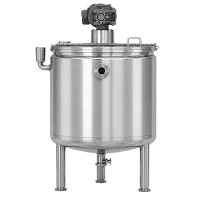

Food-grade vacuum evaporators are widely used in fruit juices, dairy products, syrups, plant extracts, condiments and other food concentrate. During continuous production, sugars, proteins, minerals, and other solids in the product may gradually attach to heat exchangers, pipes, and evaporation chamber. Poor cleaning and maintenance will not only affect heat transfer efficiency, but also lead to product contamination, equipment corrosion, and reduce production efficiency.
Therefore, the routine management of food-grade vacuum evaporators cannot merely guarantee normal operation, but also require the establishment of standard cleaning, inspection and maintenance procedures.
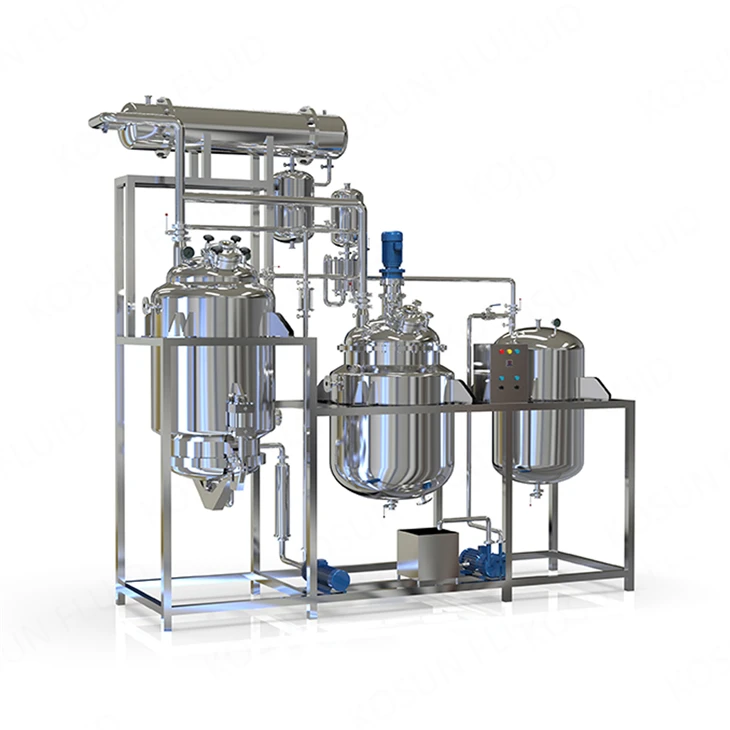
1.Wash it immediately after downtime.
the food-grade vacuum evaporator shall be cleaned in time according to process requirements after production and operation.
If the residue remains in the device for a long time, it can easily dry out, scale up and even cause microbes to grow. Syrup, dairy products, especially some plant extracts, can become more viscous, making subsequent cleanups more difficult as temperatures drop.
Therefore, appropriate rinsing should be carried out immediately after production to prevent residues from accumulating on heat exchange surfaces and pipes.
Equipment equipped with anin situ cleaning system may be cleaned in cycles in accordance with established procedures, and where manual cleaning is required, the operation shall be in accordance with the equipment manufacturer's instructions.
2.Choose cleaners carefully.
Food-grade equipment is not optional for cleaning agents.
The choice of cleaning agent depends on the nature of the residue. Sediments formed by sugar, protein, fat and inorganic salt, for example, require different cleaning methods.
Consideration must also be given to the compatibility of the cleaning agent with the structure of the equipment, sealing and plumbing materials. Excessive concentration, temperature or cleaning duration can adversely affect stainless steel surfaces, seals and other components.
Therefore, the type, concentration, temperature and circulation time of cleaning agent should be determined according to the requirements of the equipment manufacturer and the cleaning process.
3. Focus on inspecting heat exchange surfaces for scaling.
Heat exchanger is a key part of the food-grade vacuum evaporator, especially easy to produce dirt.
As the time of use increases, solids in the product will gradually adhere to the heat exchange surfaces, which will lead to a decrease in heat transfer efficiency. When there is significant fouling on heat transfer surfaces, it may be reduced evaporation capacity, longer heating times or increased energy consumption.
In the course of daily maintenance, the heat transfer efficiency should be monitored according to the operation status of the equipment. If there is a significant increase in the time required to reach the expected concentration level increases, inspect the heat transfer system for dirt.
4. Inspection of vacuum system and sealing components
vacuum level is the key factor affecting the normal operation of a vacuum evaporator.
vacuum level pumps, pipes, valves and sealing components must be inspected during use if the vacuum does not meet the process requirements.
Particular attention should be paid to mechanical seals, flange connections, sealing rings and valves. Leaks that allow outside air into the system can cause vacuum levels to drop, affecting evaporation temperatures and concentration results.
Therefore, routine maintenance should include regular inspection of the vacuum system for abnormal leakage and monitoring of vacuum level stability.
5. Inspect piping, valves and connectors
Food-grade vacuum evaporators typically involve multiple systems, including product lines, steam lines, condensate lines and vacuum lines.
Maintenance procedures shall verify the integrity of pipe connections and the normal functioning of valves, as well as leaks, blockages or abnormal vibrations.
Pipes that come into direct contact with food should pay particular attention to cleanliness. Any residue, sediment or unusual contamination found must be dealt with in a timely manner.
Maintenance workers should also keep a close eye on "dead ends" in pipes, which are more likely to accumulate product residue.
6. Ensure stainless steel surfaces are clean and protected.
Food-grade vacuum evaporators are generally constructed of stainless steel, but stainless steel is not completely impervious to corrosion.
Prolonged exposure high concentrations of salt concentrations, acid or inappropriate cleaning agents can still lead to spotting, corrosion or surface damage.
Therefore, tools and chemicals that could damage stainless steel surfaces should be avoided when cleaning steel surfaces. After cleaning, it is necessary to rinse thoroughly according to process requirements to minimize the residual cleaning agent.
If abnormal rust spots, corrosion points or surface damage are found inside the equipment, they should be promptly investigated. Regularly Inspect Seals and worn parts
Parts such as O-rings, mechanical seals and valve seals may age or wear out after a prolonged period of operation of a the vacuum evaporator.
Sealing problems can lead to leaks in vacuum system, increasing the risk of product leakage and hygiene problems.
Therefore, wear area should be inspected regularly according to the time of use and actual working conditions. Seals that are deformed, hardened, cracked or worn must be replaced in a timely manner.
Replacement must comply with equipment specifications and operating conditions to avoid new leakage issues caused by the use of incorrect seal models.
8. Monitor changes in temperature, pressure and Vacuum Levels
Daily maintenance should not be limited to the period of equipment shutdown; it is equally important to monitor changes in parameters during operation.
Operators should pay close attention to heating temperature, product temperature, vacuum level, pressure and evaporation status. If any parameters suddenly and abnormally change, inspect the equipment immediately.
For example, if vacuum decreases steadily while other production conditions remain largely unchanged, the problem could result from a vacuum system leak, poor vacuum pump performance or pipeline irregularities.
Recording operational parameters can identify potential problems early and reduce the risk of unexpected downtime.
9. Regular deep maintenance
After each production run, in addition to routine cleaning, a periodic deep maintenance plan should be prepared based on running time and material characteristics.
Deep maintenance may include inspection of heat exchange systems, internal plumbing, vacuum system, valves, seals and electrical/control systems.
For materials prone to scaling, the frequency of inspection should be increased accordingly. For equipment with long continuous operation time, downtime should be arranged according to actual production loads.
Maintenance intervals should not be determined solely by a fixed schedule, but should be adjusted to manufacturer's requirements, production frequency, material characteristics and operating conditions.
Abstracts
The core objective of routine cleaning and maintenance of food-grade vacuum evaporators is not merely to ``clean"the equipment, but also to ensure its hygiene, heat transfer efficiency, vacuum performance, seal integrity and long-term operating stability.
Daily management should focus on timely cleaning afterproduction, scaling of heat transfer surfaces, vacuum systems, inspection of pipes and valves, protection of stainless steel surfaces and maintenance of seals. In addition, according to the actual production situation, periodic in-depth overhaul, and a comprehensive cleaning and maintenance records.
For food processing enterprises, standardized maintenance procedures help minimize equipment failures and production downtime, while ensuring that the vacuum evaporator maintain stable concentration performance.
Frequently Asked Questions
Question 1: How often is a a food-grade vacuum evaporator cleaned?
This is usually determined by daily production frequency, material properties and equipment operating conditions. Routine cleaning should be carried out in a timely manner after production, and deep cleaning should be arranged according to scale and operation of the equipment.
Why do a vacuum evaporator require to be periodic descaling?
The dirt on heat transfer surfaces impairs heat transfer efficiency, which will lead to the decrease of evaporation capacity, longer operation time and increased energy consumption.
Q3: Can food-grade vacuum evaporators use regular cleaning agents?
Indiscriminate use is not recommended. Cleaners must be compatible with equipment materials, seals and residues and must be used in accordance with the appropriate cleaning procedures.
Q4: What causes vacuum to drop?
Common causes include leaky vacuum lines, valve or seal problems, poor performance of vacuum pump performance and pipeline blockages; inspections should be carried out in accordance with the operation of the equipment.
Q5: Why do stainless steel evaporators still corrode?
Although stainless steel has good corrosion resistance, pitting or other forms of corrosion may occur due to specific materials, cleaning agents, temperature and long-term use. Therefore, it is very important to choose the proper cleaning processes and to maintain the equipment properly.