
The Sauce Market Surge and the Need for Customised Equipment
The global sauce and condiment market is experiencing robust growth. Data show that the global sauce and condiment market was valued at approximately USD 200.1 billion in 2024 and is projected to grow at a CAGR of 6.2% to reach USD 368.5 billion by 2034. Another report estimates that the global sauces, condiments, and dressings market reached USD 181.43 billion in 2025 and is expected to reach USD 239.6 billion by 2030.
Several drivers underpin this growth: rising consumer demand for convenience foods and ready‑to‑use sauces, home cooking and meal preparation trends that further stimulate sauce consumption, and global flavour diversification influenced by social media cooking trends, making international flavours increasingly popular. In addition, the U.S. FDA's revocation of 52 outdated food standards in 2025 has opened up greater room for formulation innovation. Ketchup, BBQ sauce, and chili paste – the three major categories in the sauce market – are all facing unprecedented opportunities.
As the market expands, sauce production is also confronting increasingly complex challenges. Consumer tastes are becoming more refined and personalised, shifting from traditional flavours to fusion profiles (e.g., Korean gochujang BBQ sauce, fermented yuzu mayo, smoked chili‑lime sauce). Clean‑label, low‑sodium, organic, and other health claims are reshaping product formulations. Moreover, the physical properties of different sauces vary widely – ketchup is a high‑viscosity fluid, BBQ sauce usually contains solid particulates (onion pieces, spices), and chili paste may contain both oil and solids – imposing differentiated technical requirements on processing equipment.
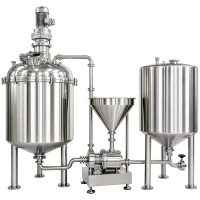
Standard, universal mixing equipment struggles to meet such diverse production needs simultaneously. This is where the value of customised stainless steel mixing solutions lies.
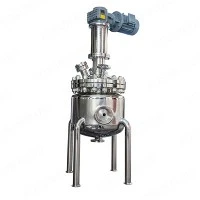
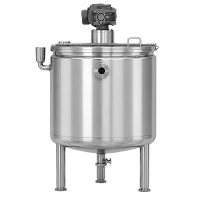
Customisation is reflected at multiple levels. Material selection: food‑contact parts can be made of SUS304 or SUS316L stainless steel depending on product acidity and corrosivity. For acidic products like ketchup, AISI 316 or 316L grades offer outstanding acid resistance, preventing damage to the product's chemical composition. Capacity can be customised from 50 litres up to 20,000 litres or more. Heating methods can be chosen from steam, electric, or oil heating according to energy availability and process needs. Agitation systems can be equipped with different types of mixers – high‑shear emulsifiers for fine emulsions, scraped‑surface agitators for high‑viscosity, sticky materials, and anchor stirrers for gentle turnover. Automation level can range from manual operation to fully automatic PLC control with recipe management, data logging, and remote monitoring.