
Video Inspection – The "Third Eye" of Quality Assurance
Video inspection technology is transforming quality control models in sauce manufacturing. It is not merely simple camera monitoring, but a comprehensive quality management tool that integrates real‑time visualisation, data recording, and process traceability.
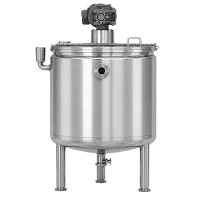
In‑line video inspection provides real‑time process visualisation during production. With camera systems installed at key positions on the mixing tank, operators and quality managers can remotely observe the material condition inside the tank – the fluidity of the sauce, the dispersion of particulates, and any abnormalities such as wall sticking or agglomeration. One equipment manufacturer recently completed professional online video inspections for 30‑litre and 50‑litre custom mixing tanks for a Malaysian client; all operational tests showed stable performance, uniform mixing, precise parameter control, and full compliance with the client's custom technical requirements.
Traceability through video recording provides powerful evidentiary support for batch quality management. Video footage can confirm how a batch was processed, who operated the line, whether cleaning procedures were performed, and how raw materials were handled. This means that when a quality issue arises in a particular batch, quality managers can trace back through the entire production process and pinpoint the problem area, rather than relying on guesswork or limited paper records.
Pre‑shipment video inspection is the final quality checkpoint before equipment delivery. Before a mixing tank leaves the factory, manufacturers carry out comprehensive video‑recorded inspections – from laser‑guided precision blanking, automatic argon arc welding, precision polishing, through multiple process inspections, pressure testing, and final performance commissioning – all under a strict quality control system. The tank is fully welded by automatic argon arc welding with smooth, even seams, followed by pickling, passivation, and mirror polishing. These inspection processes are often recorded on video and archived as part of the quality documentation provided to the customer.
The integration of video inspection with automation control is elevating quality assurance to a new level. Modern stainless steel mixing tanks are typically equipped with PLC control systems that allow precise setting and real‑time monitoring of key parameters such as stirring speed, temperature, vacuum level, and mixing time. The integration of video systems with these control data means that each batch production generates a complete "digital twin" – with both quantifiable process parameter records and visual process image archives.
For the transition from tomato paste to pasta sauce, the value of video inspection technology lies in its shift from "end‑of‑line sampling" to "whole‑process monitoring." The quality of every batch is no longer dependent solely on final sample test results but is verified and recorded at every production step in real time. This transformation not only raises the level of quality assurance but also provides strong technical support for manufacturers facing increasingly stringent regulatory oversight and rising consumer expectations for food safety.
When a video‑inspected stainless steel mixing tank enters the production line, it brings not just a piece of equipment, but a complete visual, traceable, verifiable quality assurance system – ensuring that from tomato paste to pasta sauce, every single batch meets the same high quality standard.