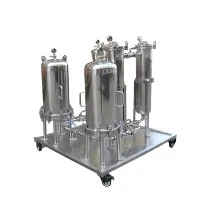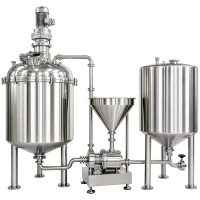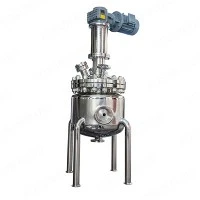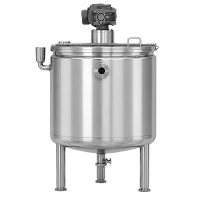

Successful integration hinges on meticulous mechanical and process design. The mixing tank's outlet must align hydraulically with the filter inlet; otherwise, pressure drops or cavitation can damage membranes. Engineers use computational fluid dynamics to simulate flow patterns, ensuring that solids remain suspended and that the filter receives a homogeneous feed. Material selection is equally critical-all wetted parts are typically 316L stainless steel with internal electropolished surfaces (Ra ≤ 0.6 μm) to prevent bacterial adhesion and to facilitate rapid, residue‑free cleaning. Welds are performed by automated TIG with full penetration and are inspected via dye‑penetrant or radiographic testing to meet ASME BPE and EHEDG guidelines. In practice, these integrated systems shine in high‑value applications. For example, a cream cheese production line combines a jacketed mixing tank with a rotating drum filter; the tank's variable‑speed agitator controls curd size, while the filter continuously dewaters the curd, sending whey to a separate recovery loop. Similarly, in fruit juice concentration, a heated mixing tank dissolves sugar and stabilisers, then passes the blend through a cross‑flow membrane system that clarifies and partially concentrates the juice in one continuous step. These installations have demonstrated yield improvements of 5‑8% and a 20% reduction in cleaning downtime, thanks to synchronised CIP routines that clean both tank and filters simultaneously. As Industry 4.0 advances, integrated systems are now equipped with IoT sensors that monitor vibration, pressure differentials, and motor currents, feeding data to predictive maintenance algorithms-ensuring that the complete line operates at peak efficiency with minimal unplanned stops.
Jul 14, 2026
Integrated Solutions: Combining Stainless Steel Mixing Tanks And Filters For Complete Food Processing Lines (Part 2)
Send Inquiry
Product Categories
Latest Products