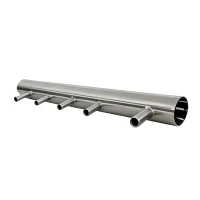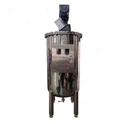

When electric vehicle batteries gulp down megawatts of power in minutes, they generate a fire-breathing dragon of waste heat. At 1 MW or higher, the thermal load rivals a small industrial furnace. Liquid cooling systems are the obvious solution, but there's a quiet, often overlooked component that determines whether the whole setup survives or self-destructs: the high-pressure stainless steel expansion tank.
Think of it as the cooling loop's "shock absorber" and "breathing lung." In a MW-level supercharging liquid cooling system, the coolant undergoes extreme temperature swings – from ambient to near-boiling in seconds – and pressure spikes that would rupture ordinary components. Without a robust expansion tank, the coolant would expand violently, cracking pipes, bursting seals, or triggering constant pressure relief events that shut down the charger.
Why stainless steel? Because polymers or standard steel can't handle the triple threat: high pressure (often exceeding 10 bar), aggressive glycol-based coolants that degrade rubber and plastic over time, and rapid thermal cycling that causes fatigue. Stainless steel provides the strength to contain surges, the corrosion resistance to last a decade, and the dimensional stability to maintain precise pressure control.
In essence, this tank enables the cooling system to "breathe" – absorbing expanded fluid when hot, releasing it back when cold – while keeping pressure within a tight window. Without it, every megawatt charger would be a ticking time bomb. So next time you see a 15-minute full charge, thank the stainless steel cylinder silently working behind the panel.