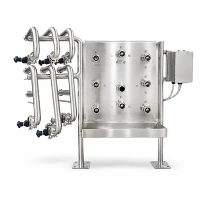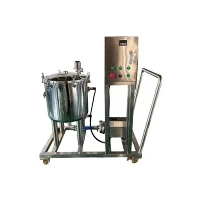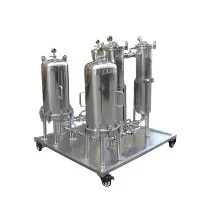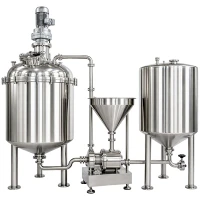

Polishing is the last filtration step before a product is packed, and it is usually a compromise between clarity, cost and time. A bag filter housing fits that compromise better than most options. One bag presents a large open filtration area, it holds a lot of solids before the pressure drop rises, and it is cheap to change. For edible oil after bleaching and winterisation, and for beverage or syrup before the filler, that combination is often the practical choice.
Why a bag rather than a cartridge
A bag filter is a depth filter with a nominal rating. It is not intended for absolute removal, and it should not be specified as if it were. What it does well is take out the coarse and medium load at high flow with a low initial pressure drop, so that a finer stage downstream is protected. In an edible oil line the bag removes bleaching earth fines and precipitated wax; in a beverage line it catches fibre, pulp and filter aid carry over before the final membrane or cartridge stage.
Housing design details that decide performance
The bag has to seal against the housing so that nothing passes around its rim. A positive seal, either a ring seated in a machined groove or a bag with a moulded collar, is the difference between a filter that works and one that only looks like it works. Side entry housings give a more compact installation at high flow, top entry gives easier access where headroom allows. The basket has to support the bag under differential pressure without collapsing it, and the housing has to drain completely so that oil or syrup does not stand and oxidise between batches.
Sizing for viscous products
Oil is far more viscous than water, and viscosity falls as temperature rises, so a housing sized on water flow will be badly undersized on cold oil. The correct approach is to size on the flow and viscosity at the actual operating temperature, then check the clean pressure drop and the expected rise before change out. Flow per bag of ten to twenty cubic metres per hour is a common starting range for water like liquids, and it should be reduced for viscous product rather than assumed.
Materials and documentation
Housings are normally 316L stainless steel with clamp or flange connections, and bags are available in polypropylene, polyester and nylon mesh across a wide nominal range. For food contact, elastomer seals should be supported by declarations based on FDA and BfR requirements, and material certificates to EN 10204 3.1 should be supplied for the housing. Send us the product, flow, temperature, viscosity and target clarity and we will size the housing and the bag grade together.