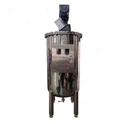

In the world of food and beverage, pharmaceutical, and biotech manufacturing, cleanliness isn't just a best practice-it's an absolute necessity. A single contamination event can lead to massive product loss, regulatory action, and a devastating blow to brand reputation. At the heart of modern hygienic processing lies a critical piece of equipment designed to ensure cleanliness efficiently and reliably: the Clean-In-Place (CIP) Tank.
A CIP Tank is a specialized vessel that acts as the central reservoir and recovery unit for cleaning solutions within a CIP system. Unlike a simple water tank, it is engineered to the highest hygienic standards, facilitating the storage, heating, circulation, and often, recovery of cleaning chemicals and water.
Think of it as the "mission control" for the cleaning process. It doesn't just hold liquid; it ensures the right solution, at the right temperature, and the right concentration is delivered to the equipment being cleaned.
There are two primary configurations:
Single-Tank CIP System: Uses one tank that sequentially holds the pre-rinse, caustic/acid wash, and final rinse water. This is a more compact and cost-effective system but is less efficient in terms of water and chemical usage.
Multi-Tank CIP System: Employs multiple dedicated tanks-typically one for caustic solution, one for acid solution, and one for rinse water. This allows for excellent recovery and reuse of chemicals, leading to significant operational savings and reduced waste.