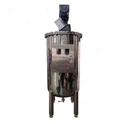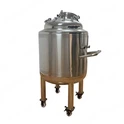

The CIP tank is the staging ground for a pre-programmed, multi-stage cleaning cycle. A typical cycle looks like this:
Pre-Rinse: The cycle begins with a rinse using water (often recovered from the previous cycle's final rinse) to remove loose soil and product residue. This initial rinse is typically sent to drain to prevent heavy soiling of the chemical solutions.
Caustic Wash: The CIP pump draws the hot caustic solution (e.g., sodium hydroxide) from the CIP tank. This solution is circulated through the process equipment for a set time and temperature. Its job is to break down organic soils, fats, and proteins. In a multi-tank system, this solution is returned to the same tank for reuse.
Intermediate Rinse: Fresh water is used to flush out all traces of the caustic solution from the system, preparing it for the next stage.
Acid Wash (Optional but Common): An acid solution (e.g., nitric or phosphoric acid) is circulated from its dedicated tank. This step removes mineral scales (like milkstone or beerstone) and neutralizes any residual caustic, leaving a passive surface.
Final Rinse: The system is given a thorough rinse with purified water (like Reverse Osmosis or RO water) to ensure no chemical or microbial contaminants remain. This high-quality rinse water is often captured in the CIP tank to be used as the pre-rinse for the next cycle, optimizing water usage.
Throughout this process, the CIP tank is equipped with components to maintain solution efficacy, including a heater to maintain temperature, a level probe to control volume, and often a conductivity probe to monitor chemical concentration.