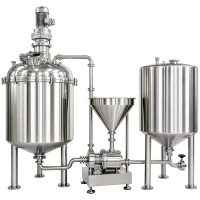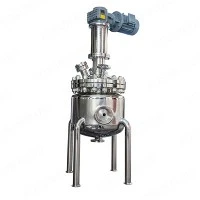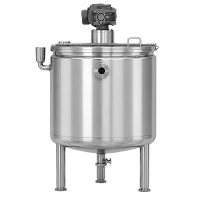

Homogenizer and emulsifier pumps are used to achieve the emulsification, stirring, mixing and other process of liquids, but there are some differences between them.
First, the working principles of homogenizer and emulsifier pumps are different. The homogenizer uses a high-speed rotating blade or rotor to force the liquid to squeeze and disperse it into tiny particles, thereby achieving the emulsification and mixing of the liquid. The homogenizer uses a high-speed rotating impeller to generate strong swirl and shear force in the liquid, so that the liquid is evenly dispersed, thereby achieving the emulsification and mixing of the liquid.
Secondly, there are also differences in service life and maintenance costs. Because the blade or rotor of the homogenizer rotates at high speed, it is susceptible to wear and needs to be replaced frequently, so the maintenance cost is relatively high and the service life is short. The impeller of the emulsifier pump is made of high-strength material, has good wear resistance and corrosion resistance, relatively low maintenance cost, and long service life.
Finally, homogenizer are mostly used in the emulsification, mixing, and dispersion of liquid products, such as in the cosmetics, food, and pharmaceutical industries; while emulsifying pumps are mostly used for stirring, mixing, and emulsification of viscous substances such as liquids, emulsions, and emulsions, such as in the paint, glue, and asphalt industries.