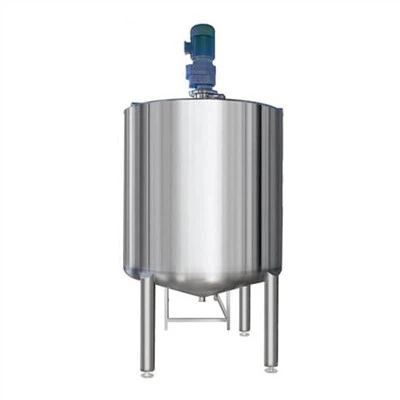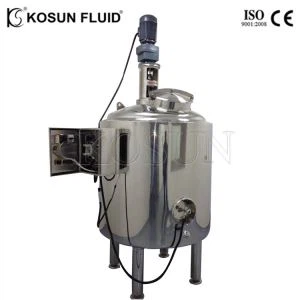


In the realm of industrial mixing and processing, efficiency, consistency, and product quality are paramount. Among the array of technologies designed to meet these demands, tank bottom homogenizer tanks have emerged as a pivotal innovation. These specialized vessels are engineered to achieve thorough mixing and homogenization of diverse substances, catering to a wide range of industries from pharmaceuticals to food processing.
Tank bottom homogenizer tanks, also known as bottom-entry mixers or bottom-agitation tanks, are characterized by their unique design where the mixing mechanism is located at the bottom of the tank. Unlike traditional top-entry mixers, which may struggle with uniform mixing and require higher energy inputs, bottom-entry mixers offer several distinct advantages:
1. Efficient Mixing: By positioning the mixing mechanism at the tank bottom, these tanks promote efficient circulation and turbulence throughout the entire volume of the tank. This results in faster and more thorough mixing, ensuring uniform dispersion of ingredients and reducing processing times.
2. Enhanced Homogenization: Achieving a consistent blend of ingredients is critical in industries where product quality and stability are paramount. Tank bottom homogenizers excel in creating a homogeneous mixture by preventing stratification and ensuring that all components are uniformly distributed.
3. Flexibility in Design: These tanks can be customized to accommodate a variety of mixing requirements, including different viscosities, shear-sensitive materials, and specific processing conditions. Variable agitation speeds and configurations allow operators to optimize mixing parameters for different products and formulations.
4. Reduced Maintenance: Bottom-entry mixers typically experience lower mechanical stress compared to their top-entry counterparts. This can lead to reduced wear and tear on equipment, extended service life, and lower maintenance costs over time.
The versatility of tank bottom homogenizer tanks makes them indispensable in numerous industrial sectors:
- Pharmaceuticals: Used for blending APIs (Active Pharmaceutical Ingredients), excipients, and other additives to ensure uniformity in dosage forms such as tablets, creams, and syrups.
- Cosmetics: Essential for mixing pigments, emulsifying agents, and other ingredients in the production of creams, lotions, and makeup products.
- Food and Beverage: Ideal for homogenizing ingredients in dairy products, sauces, dressings, and beverages to achieve consistent texture and taste.
- Chemicals: Applied in chemical processing for mixing reactive substances, catalysts, and additives to produce consistent and high-quality formulations.
The adoption of tank bottom homogenizer tanks represents a significant advancement in industrial mixing technology. Manufacturers benefit from improved efficiency, enhanced product quality, and reduced operational costs. Moreover, as industries continue to prioritize sustainability and operational efficiency, the energy-saving benefits and reduced waste associated with these tanks further enhance their appeal.
Looking ahead, ongoing research and development aim to further refine tank bottom homogenizer technology. Innovations may include advancements in materials, automation, and smart monitoring systems to optimize performance, increase reliability, and further reduce environmental impact.
In conclusion, tank bottom homogenizer tanks have become indispensable tools in modern industrial processing. By combining advanced mixing capabilities with operational efficiency and product quality, these tanks play a crucial role in ensuring consistency and reliability across a diverse range of applications. As industries evolve, the continued innovation and adoption of tank bottom homogenizer tanks promise to redefine standards of excellence in mixing and processing worldwide.


Hot Tags: 150l stainless steel homogenizing mixing tank, manufacturers, sanitary, stainless steel, food grade